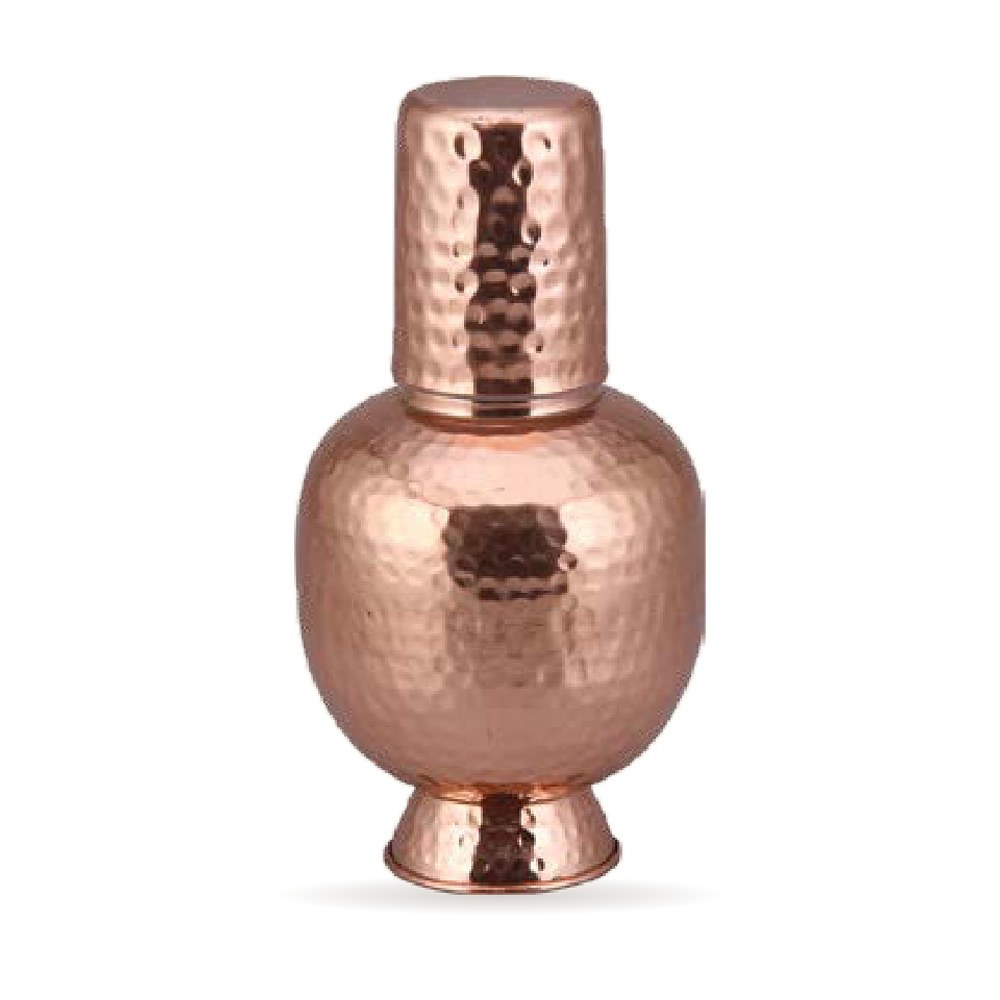
Is it good to drink water from a copper bottle?
Drinking water stored in a copper vessel, called tamra jal, is a centuries-old Ayurvedic practice. Traditionally, water is kept in a pure copper bottle or jar for 6–8 hours (usually overnight) and drunk in the morning. Use plain drinking water only, and consult a doctor for any health concerns; this is traditional practice, not medical advice.
How long should water be kept in a copper bottle?
Traditionally 6–8 hours, typically overnight. Refill the bottle with fresh water every day rather than storing the same water for several days.
Can I put lemon water, juice or milk in a copper bottle?
No. Do not store lemon water, juices, buttermilk, milk or other acidic drinks in unlined pure copper. Use pure copper bottles, jugs and jars for plain drinking water only.
How do I clean a copper bottle?
Rinse with water and dry after use. Once a week, scrub with half a lemon dipped in salt (or a paste of vinegar, salt and flour), rinse well and dry with a soft cloth. Avoid dishwashers and steel scrubbers. Antique and meena-painted finishes only need a soft dry cloth.
What is the difference between pure copper and steel-copper?
Pure copper pieces are copper inside and out, and are meant for storing plain drinking water. Steel-copper pieces combine stainless steel and copper: where the inside is stainless steel (stated on each product), they can hold any drink or hot food; where the inside is copper, use them for plain drinking water only.
What is kalai (tin) coating?
Kalai is a thin layer of pure tin applied to the inside of copper and brass cookware. It is the traditional way to make these metals safe for cooking. When the kalai wears off after years of use, a local kalaiwala can re-coat it.
Is kansa (bronze) good for eating?
Kansa, or bell metal, is a traditional Indian alloy long valued in Ayurveda for thalis, bowls and glasses. Wash it with mild soap, dry it immediately, and polish occasionally with tamarind to keep its golden shine.
What are good copper gifts for weddings, Diwali or housewarming?
Popular choices are copper bottles and lemon sets (wellness gifts), matka tanki water dispensers (housewarming), brass urulis and puja lotas (Diwali), and thali or dinner sets (weddings and shagun). For 25 or more pieces, see our
Bulk & Corporate Orders page.
Do you offer Cash on Delivery?
Yes. Cash on Delivery is available on orders up to ₹2,500, with a small ₹100 COD charge. We call or WhatsApp to confirm COD orders before dispatch. For larger orders, please pay online with UPI, cards, netbanking or wallets.
How do I order from Rivaj?
Choose a size, add pieces to your cart and pay securely online with UPI, cards, netbanking or wallets, or choose Cash on Delivery. You can also order on WhatsApp. For bulk or corporate orders, send an enquiry from the Bulk Orders page.
Are there any extra charges?
Delivery is free across India on orders above ₹999; smaller orders have a flat ₹99 delivery charge, shown clearly before you pay. For large corporate orders, ask us about special pricing.
How do I know if copper is real?
Pure copper is not magnetic, turns bright pink when rubbed with lemon and salt, is copper-coloured inside and feels heavy for its size. See our
pure copper test guide and the Rivaj Purity Promise.
Why has my copper turned dark?
Copper naturally oxidises when it meets air and water — it's a sign of genuine copper. A quick polish with lemon and salt restores the shine.
Can I cook in copper?
Only in copper that is lined, with kalai (tin) or stainless steel. Each product page states whether a piece is kalai- or steel-lined. Unlined pure copper is for water only, and unlined brass is best for dry use such as storage.
Do you do corporate and bulk orders?
Yes — with tiered pricing, logo engraving and custom packaging. Visit our
Bulk Orders page to share your brief.
Why does my piece look slightly different from the photo?
Each piece is handmade, so hammer marks, embossing depth and tone vary slightly. This is the mark of handcraft.
Do you ship across India?
Yes, we deliver across India: free on orders above ₹999, and a flat ₹99 below that. Regular orders are dispatched within 3 business days; bulk and corporate orders follow the timeline in your quote.